

Interview with Peter Stahl, SCREAM – 20-07-2026
SCREAM
Ahead of their Italian appearance at Distruggi La Bassa Festival on July 31st (presso Agriturismo & Agri Camping Prato Pozzo – Località Anita di Argenta, Argenta, Italy near Ferrara), Peter Stahl, frontman of Scream band spoke with Eleonora Tagliafico for Rocktrotter on Radio Città Aperta. The conversation covered the theme of the band’s latest album “DC Special”, the sense of community within the punk hardcore scene, the enduring value of radio as a tool for music discovery and education, and why music continues to be a powerful vehicle for political and social expression, among many other topics.
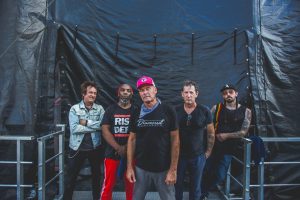
Photo by Colin Smith
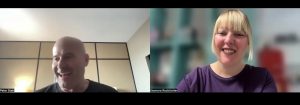
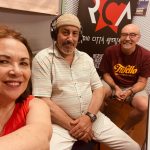
Screenshot of Zoom Interview
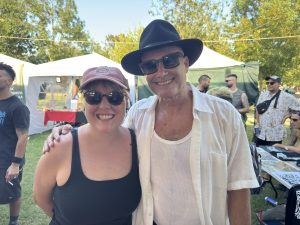
At DLB Festival
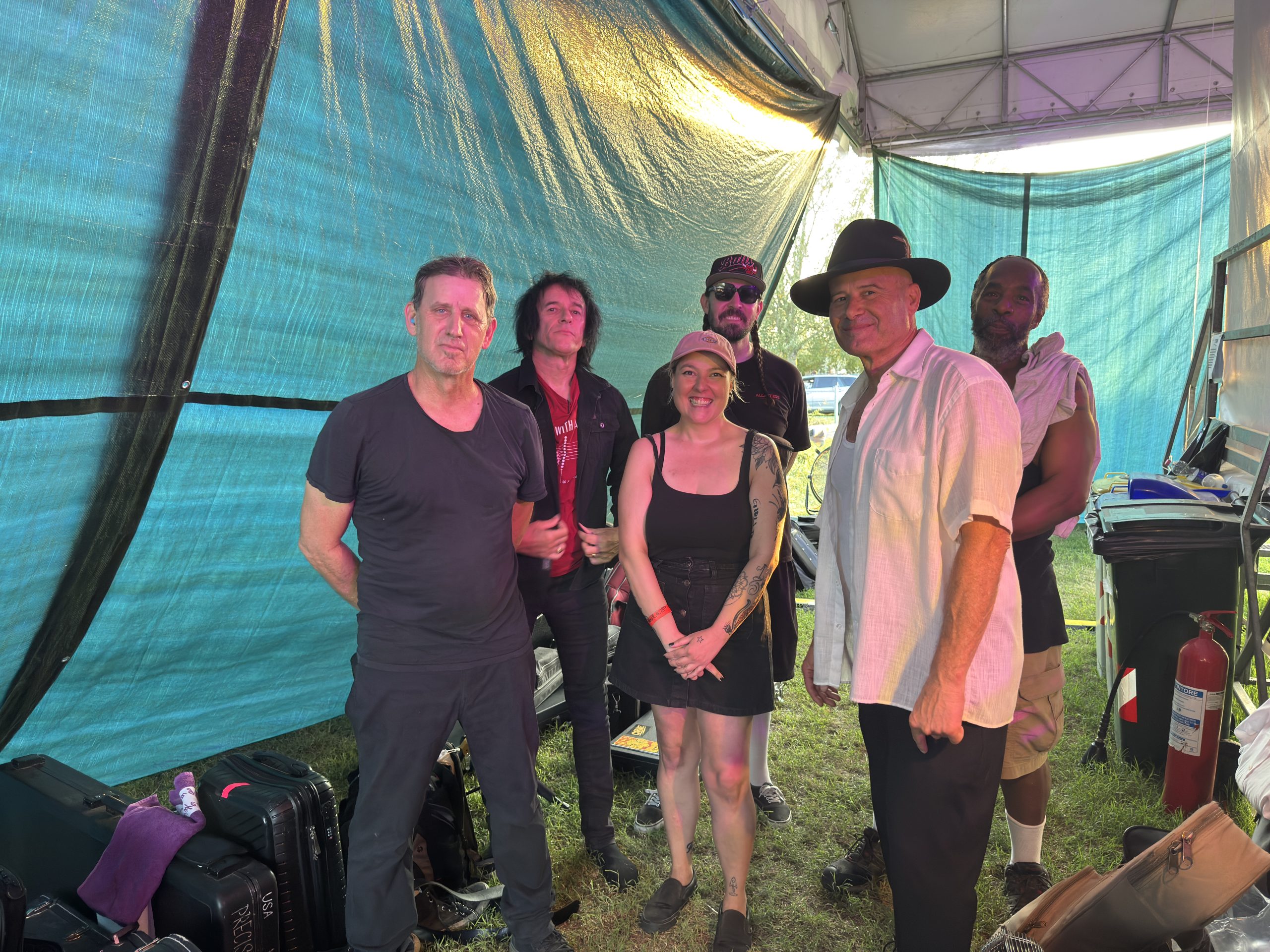
At DLB Festival
Let me briefly introduce myself to you. Radio Citta Aperta is an independent radio station based in Rome with roots in the 70s. And I run Rocktrotter as a speaker, which is a show on the subcultures, underground music and music locations too.
Okay, cool. Well, thank you for having me. I’m honored to be interviewed by such a station.
Thank you too, Pete.
For me, radio is like my teacher in a way because, I learned, I’m fortunate enough to learn, my father managed rock bands, and my brother and I, our father managed rock bands in the 60s. And so we were introduced to music at a really young age and also introduced to subculture, alternative music in a scene, because it was like the hippie scene kind of, you know, the rock scene. But also it was a DIY scene. I remember sitting in the apartment with the band and I was like 10 years old looking around and seeing flyers and things people were doing these shows themselves and it had a big impact on me and my brother and from that time on we wanted to be in bands but then also I think it just made us want to be independent; and I saw the Beatles on TV so, I started playing guitar on a tennis racket, so we got into music and into like kind of that attitude of doing things yourself real young through being around it, and then I, as I got, as I went into my teenage years, I kind of rebelled against my family, you know, as a young kid, I kind of lost my direction because my dad was not around, and I would listen to the radio late at night, and I was just way into music, and I learned a lot about the blues and bluegrass and rock and roll and psychedelic rock and all these things and jazz from listening to the DJs that were on the local radio stations in the Washington, D.C. area, and at that time, there was a lot of good independent stations, stations were more independent then and i’m sure it’s the same situation in Italy as it is in America where you have the corporate takeover of radio stations just like you have the corporate takeover of all the venues and around the world by Live Nation and AEG and these companies massive conglomerates but you know, there was this time in the in the late 60s and 70s when this new explosion of rock and roll and also counterculture and that thinking was making changes and there was all this cool new programming on radio stations, usually it’d be like late at night like after midnight and on some stations and there was one station in particular in our town called “WHFS” and i used to listen to overnight and learn a lot about music and so that was an education for me. And I heard some of my first punk rock, you know, on these stations, like discovering Iggy Pop and also a lot of bands from the 60s that I never heard about. And so, I’m really grateful to be on your station because it’s kind of, I formed like a molecule from the radio waves.
We try to stay independent and free, you know, in a world full of commercialism.
Yeah, it’s really difficult. The other thing about radio, and it’s cool, and that’s been so important in America, and especially in my hometown of Washington, D.C., was the college radio. And so there you still can find independent programming a lot and and gives you know people the opportunity to become teachers by playing music and people discover it that way
Giampiero Capra from Kina says hi and that you will see each other at Distruggi La Bassa here in Italy when you will play
Yes, I can’t wait.
So we remind you that Scream will be headlining the second day of the Distruggi la Bassa Festival on July 31st here at Ferrara. And this year marks the 10 years of the festival too, so it’s important, you know.
It’s really important to us too because we have such great memories of playing in Ferrara. And, you know, when we first came to Europe in 1986, we were just a bunch of young punk kids and the people and the bands there were so welcoming. And it was just, you know, we fell in love with Italy and coming to Europe like that in the late 80s, the first time, it’s the type of thing that happens in your life only once. And you never forget it.
What do you think of these festivals? Can you breathe the same air you breathed in the 80s’?
Well, obviously it’s a completely different time. But that’s kind of what happens to us when we go on stage. We kind of reinvent ourselves again, you know, each show. our fire is lit by the music that we play. And the lyrics of our songs that, we have old songs, we have new songs, but we make them new every time we play.
D.C. Special. (The latest album) is a dedication to Washington, D.C. But also, a dedication to those communities.
I mean, that’s what it’s all about, right? It’s community and family and where you’re from, and every scene, every little hardcore scene, every little punk scene, every little garage scene, there’s all these like little scenes in different towns everywhere. And people that are into the, into that, find each other that way. And they find themselves through those, through that community that they discover and that they create. And, you know, we’re very fortunate to become part of the DC Hardcore Scene. We’re just lucky that happened to us; I mean we made it happen too because we come together as kids and we make this band and we want to make music we want to travel the world play music and express ourselves that way but we kind of we already had that mission before we discovered hardcore but then and as through our journey and being a band and writing songs and playing in our neighborhood, then we discovered the hardcore scene that was kind of happening in D.C. And we wanted to be a part of it, you know, especially after seeing the Bad Brains and Teen Idols and those kind of bands. And we identified with those bands and that music. And so we worked hard to be a part of it. And we were welcomed in. And Ian MacKaye, he asked us if he wanted to make a record for Dischord, after we came back from our first tour. And so that’s how it happened. And so we made our first album for Dischord, and it came out in 1983. It was Discord number nine. And, we did that record at Don Zientara’s in the basement of his little house that they have in Arlington, Virginia. And so when it came time to make a new record we wanted to make it with Don again. And we found out that his studio was closing. It had moved from his house to his studio for, like, over 20 years. And a lot of great music from there. So he it was closing. It’s where we did most of our records were at Don Zientara’s, either in the basement or at the larger studio. And he was getting ready to close. So because the city was closing the building. They condemned the building, which was really unfortunate, but it also gave us the motivation to get it together. And so I wanted to, me and the rest of the guys, we wanted to make the record special. Sorry to be so corny and cliche, but we had came up with the concept to tell our story of Scream through collaborations with our friends and our peers and also our influences. And so we invited musicians from the old D.C. scene. And like I told you, our father managed a band called The Hangman, and they were a band that were popular in Washington, D.C. in the late 60s. And they had a regional hit called, which was “What a Girl Can’t Do”. And we asked the drummer if he would be interested in being part of our record. And coincidentally, small town rock and roll, he’s married to this woman, Martha Hall, who was a singer that I used to watch as a teenager. She had a band called The Deceits and The Slickee Boys. And they were from this, that band was from the 70s, late 70s and 80s. And, you know, so we were able to make a thread from the past and how we grew up and being influenced by music to now and also inviting people from, our scene that are from our scene and our age. And so they, some people were not able to participate, but, a lot of people got fired up And it became a big kind of celebration studio session in a way because also it happened at the time where we were still coming out of COVID. So we had to be a little careful when we were recording. But COVID was kind of behind us, but it was still, we were coming out of it. We were still being careful. And like we set up the studio so people, we had an area outside where people could hang out. And we had a Joey P was kind of directing that. And Joey P, who also, he had recorded “This Side Up” with us and he was our sound guy. And also he had worked with Don for many years. And yeah, so he was directing the traffic and everybody came and a lot of people were coming that weren’t on the record. And so it kind of turned into a real party. And it surpassed our expectations. And you can listen to what the result was, 18 songs. And, yeah, so I think we were successful in completing our mission in that record.
This was one of my questions. What role did Inner Ear studios, play for Scream? You anticipated it.
I think, you know, like we started this conversation talking about the education that radio makes. Well, the studio also is a classroom. And Don Zientara is our professor. And thankfully, we all from the DC scene benefited from his mentorship, because when we made “Still Screaming “, we didn’t know anything about recording. And we did “Still Screaming”, like 21 songs, in three days. And he made us feel comfortable and allowed us the freedom to be ourselves and encourage that. And so that’s what also helped us become, you know, what we are today. And as far as songwriters and things like that. So Inner Ear was crucial for that. In fact, though, we had made a demo with Don Zientara at Inner Ear Studios before we even met Ian and Discord, there was a band, a kind of cool new wave band called The Laymen. And their bass player, Jefferson Rogers (nomi non verificabili secondo le fonti disponibili), he had seen screenplay at a local new wave club that we would play at (I think he saw us at this place called Poseurs. And I’m not sure ) but he said: “Hey, I want to record you”. And so we did our first demo at Don Zientara’s studio early on, even before we did the Dischord. So our education at Inner Ears started very early, and then we, you know, we’re still doing it with Don when we can.
What do you miss the most about the early days? I wouldn’t say the vanlife?
I mean, the vanlife is still happening, you know? We’re Vanimals. And I’m fortunate as a tour manager, I work for a lot of other artists, I get to travel on a bus and that’s great. And it’s much easier. But you also miss a lot because just it’s the nature of how it works. But in a van, you experience more and you see a lot more and you’re more, involved, so to speak; it can be very tiring and we’re still touring mostly in a van. Maybe one day Scream can, can get, be on a bus. I hope that would be fun. I would like that for everybody, but, what do I miss from the old days? You can’t go back in time. I miss a lot of the friends and faces of people that are no longer with us because when I think of the old days, like, we go back to Ferrara and play the festival. I mean, we’re going to see some old faces and friends that we made at that time. And so life goes on and we’re very fortunate to have this moment again. But so what do I miss? I miss the people that are no longer with us, including our drummer, Kent (Stax n.d.a.), who we miss. And I think about him all the time. I know that might sound a little weird, but, I’m lucky that we get to play songs that remind me of, you know, he wrote them with us. So when we play the song, sometimes I think about him, and especially it’s because we all are you know full grown now and everyone lives in different places and has families and things like that we have to rehearse independently and separately and then we come together like we’re going to come together, we brush up on all our material and then we high five and we go do the show but you know, we all rehearse independently by ourselves and personally me as the vocalist, I just go into a room and I play I have a playlist of our set and then I sing karaoke to it because I enjoy that but also I have to do that especially at my age to be able to physically keep up the chops so to speak and so, but in some of our tracks you’ll hear I can hear Kent talking and so and then I remember him and it feels good and so, that’s what I miss about the old days, those old times and some of the people that I don’t see anymore for whatever reason we lost touch or they’re no longer here
Thank you for your answer Peter
DC Special: in the lyrics there’s a strong contrast between memories of the past and problems of the present so when you write about community loneliness changing cities and social injustice do you still see music as a political tool or more as a way of describing and reflection what you see happening around you
Oh it’s still a political tool because it’s how I communicate my thoughts and feelings and reactions to things and so I think people do listen to the lyrics and it affects everybody differently. And sometimes people may not understand or they have their own interpretation of what the lyrics mean. But no, I think expression through lyrics and music and art is what drives our culture and thought and helps us try to understand what’s happening around ourselves us and try to figure out ways to move forward. But yeah, we have to scream about what the fuck’s going on around us and try to make change and live through it together. And I think songs do that. That’s why I remember, like I told you, this record was… was made through Covid and i remember reading about you know Italy and was one of the first places where it was really seemed to hit really strong, and I remember seeing things on the news about people singing from the balconies and I write about that in the song “Dead Cities” and that song is kind of informed from that and the singing and I think people sang traditional older songs and those that emotion of singing is what helps people get through things, you know, and try to deal with what’s happening. So, yes, the lyrics are still a tool. They’re a tool for survival.
You spent most of your life singing about convictions. Do you think outrage has become too easy in this age of social media And what does meaningful resistance look like now?
Yeah, that’s really interesting because, now outrage is used as a tool to manipulate people through social media. It’s obvious, you know.I think the answer to that is to put your fucking phone down and pick up a guitar. That’s one thing about why I think live music is more important now than ever before, because it’s real. And it’s one place where people come together and interact with each other personally. And then you find that you actually have things in common and you are like all there to see that band. And you all may have different political beliefs, but you like that band. But yeah, I mean, I don’t know. I don’t know if I answered your question, but it’s complicated. I think that with this rise in technology, it’s happened so quickly. We’re still trying to figure out ways to understand it and try to work with it and try to get better with it. When I was a kid, the question was, “Are we watching too much TV? What is TV doing to us?” So it’s just a new form of manipulation. It’s a capitalistic kind of, they just want to sell you stuff. That’s all. It’s just about getting your attention. And so they’re using outrage to get your attention so they can sell you something. So unfortunately, that’s the way it is. But I think we’re all smart enough that we need to like try to put it down and get away from it as much as we can and and i think it’s already that kind of awareness is happening but of course the masses are going to be, it’s just technology is happening so fast it’s hard for us to keep up with it
The title track of DC special is like a postcard, also the video,
oh thank you you
do you have a favorite spot in DC?
Wow well I’m I don’t live there anymore but my mother’s still there and I go we go back as much as possible to visit my family; our current drummer Andrew Black his he’s also from Washington DC in fact he was born in D.C. me and Franz were born in Maryland Enoch was born in Virginia and Andrew was born in D.C. so we’re still D.C. Special now, we do have Gizz (Butt n.d.a.) but playing guitar with us but he just joined us recently we’ll just put him to the side about the D.C. thing but I think going home to Bailey’s Crossroads and driving around the old neighborhood and visiting my mom. And my favorite places are where we came from. And I and so I have to say it’s the Virginia side of D.C., South Arlington.
Well, where Inner Ear Studios was
Exactly. And if you’re from that area, and I always I kind of make fun of this with my partner, because she’s from the north side of Arlington and we’re from the south side. So I always kind of joke with her about that. But I love the whole area.
You’ve lived several lives. In SCREAM, Wool, Godsnake, Earthlings?. But also tour manager, as you said before. Which version of Peter do you feel closest to today?
Today, it would be… I’m in the middle of a tour, and I’m tour managing a group of my friends, but a very fortunate and lucky band called Sunn O))). And today we’re here, this week we’re performing here in Portugal. So I’m with them preparing for some shows tomorrow and the next day. And so I have a lot of work to do with them. And at the same time, I am working on, Scream Trip is coming up real soon. And I had to do some paperwork today for us. There’s, you know, a lot of people that come see bands, they don’t realize that there’s like tax paperwork and there’s work permits and things like that. And today I completed the tax paperwork for the show that Scream is performing in Belgium. And then also I finished the paperwork for, Scream to play in the UK, you have to have work permits and so arranging the van; one cool thing about this tour is we start the tour in Italy which is really fun, especially in Ferrara which is a special place for us but then also the last show we do on this upcoming tour is at Punk Rock Holiday which is a really cool festival in Slovenia and if you’re listening to this in Roma, you should get in your car and drive up there And it’s in a town called Tolmin in Slovenia. It’s a beautiful place and the water comes out of the mountains. It’s like bright green. It’s like fantasy and super cold though but it’s a three day festival (maybe even more), tons of killer bands. So the closest city to fly into for that festival is like either in Bologna or Venetia or Milan. And so we’re flying into Bologna. So we’re flying into Bologna on this trip and we’re flying out of Bologna, which is also another special city for us, you know, from playing the squat there in the 80s as well. And so we have friends from there and all over Italy. So we’re so lucky to start our tour and end our tour there. But there you go.
Thank you for the advice.
So as you can see, you asked me, I’m sorry I’m rambling so much, but what am I close to right now? It’s the management of these tours, including my friends who I work with in Sunn (O))) n.d.a.), and then also with Scream and others as well.
Also in Blackpool, You’ll play at the Rebellion (Festival n.d.a.)
Yeah, that’s so cool. And we get to play with some of our heroes, like never in my wildest dreams did we ever think we would be on a bill with bands like the Ruts and Sham 69 and the Exploited or whatever, we just never thought we’d be on the same lineup with those bands. So it’s fun that it’s still in 2026 you can go to Rebellion Festival and play with all these great bands and these tribes of people come together.
I’ve never been to Rebellion, but in the future, maybe.
Yeah, come on!
How important are clubs such as Black Cat and 9:30, and many others, to develop a music scene?
Yeah, well…You know, those type of the small independent clubs are crucial to developing local music. And that’s why people should support those venues that are independent and support local bands, but when you have challenges with no clubs and you have to figure out a way to make it yourself and then, (And that’s what we did in Washington, D.C.) like, when when we first started Scream there, they were no clubs were booking punk bands or. And so we couldn’t get that. Mostly the people would book fans that play cover music, like Lynard Skynyrd and things like that. So we started playing in backyard parties and in basements and at schools and churches, and wherever we could get a space. And eventually that little scene grew out of those independent shows. And then somebody’s like, oh, okay, we can maybe make a, I can have a night at this club. And he goes to the club owner and says, hey, I have these bands. We can draw this many people. And then you get into the club and then you get started that way. But yeah, those small clubs are so important to develop the community that comes with those scenes. I mean, speaking of the 9:30 Club, the last time I was there was just like a month ago. I went to see this band that I mentioned earlier, the Slickee Boys, really cool garage band from Washington, D.C. Not a lot of people then, as obscure as Scream is, but they were really important to our scene. And they played all those small clubs. And I’m talking, you know, Everybody listening understands .The scene is like 30 people 40 people. But that’s where it grows from. And so It’s so special when you have a place like that in your town that you can go to and you can find other people that you identify with and have fun with.
Sorry about this question but, have you ever feel underrated as a band, but in a positive way you know in a positive way, of course
I have to say, we always have felt that way and in life we feel like we’re underdogs which is okay we know that we’re a good band and we feel confident about ourselves musically, and that was always important to us, because like me and Franz and Enoch and Kent, we, our band came out of high school and we came out of high school sports and we kind of like had that attitude of like: “yo, man, we want to be as fast as them. We can be just as good as them, and we’ll go, we’ll go play shows and we’ll show them what, what we can do”. You know what I mean? That’s the fun part of it, it’s a competitiveness. So we know we’re fucking bad-ass. We’re down with playing with anybody because we know we can we can play, we can we got something that is special to us and also you know also what we sing about is what is our thoughts and what we can we we’re willing to stand with anybody and play our shit so uh, I don’t really care about that stuff. We’re just lucky. We’re playing in Ferrara on the 31st of July. And I hope people come see us. And the people that are there, I’m sure that they’ll see Scream.
Do you think people have expectations to see you live?
Yeah, I’m sure, and it’s our job to fuck that expectation up. No, I mean, we’ll be playing, like, a new song when we play in Ferrara, that we have a new song coming out on Dischord, I don’t know the date, and I won’t say anymore about it at this time, but, I know people want to hear the songs from the first record and second record. That’s just what goes. That’s the business of rock and roll. People want to hear the old shit. I’m the same way, but you know, we are Scream in 2026 and we’re going to play a little bit of everything from all our records from over the years. And we’re going to be, or you’re going to see what Scream is now. And so it might not be exactly what someone might have in their head, but I think that we hopefully maybe surpass their expectations and that they walk away saying wow, “they’re better than I though t they would be” . That’s what we want people to leave with.
So, three more questions Peter, thank you very much
I don’t know if you already answered to this but what did music save you from?
Hmm. Well, I think music saves me from, I think it saves me from daily life of, I don’t want to say boredom, but I don’t know what it saves me from, but I know that what it gives me is a lot of joy and so much opportunity so and you know a new feeling for life every day through the music that I get to create with all the different bands that I’m part of and that Scream gets to relive when we get back together and renew ourselves that way So I know it gives me a lot and so I think it saves me from a lot.
I have a silly question. All your records from “Still Screaming” to “Fumble” last about 40 minutes, more or less. And DC Special, last one hour, there is a special reason or it is just a coincidence?
Well, that’s a good question. I think we had a lot of energy and we did make one record in 2010. I think it came out in 2011. Not a lot of people know about it. It’s called “Complete Control” and it was on side one, dummy. But prior to that, we hadn’t made a full-length record since we made “Fumble”, which I think we made in like 1989. So we had a lot of energy and a lot of built-up emotion and things to get out. Luckily, through the digital, you can only fit so much on vinyl. And though I did ask the president, Ian McKaye, of Dischord Records if… We could make two vinyls, but he’s very pragmatic and probably knows what’s best and kind of reels us in with our ambitions. We’re only able to make one vinyl. So we had to pick the songs and, luckily we have with the digital world, we can release more. So yeah, we just had a lot of material is what it comes down to.
People often ask what Scream meant to hardcore punk, but I’m more curious about what meant to you as a human being. Who would you be without this band?
Oh, I would have found something else to get into, I’m sure. Honestly, I would probably be a business owner, because being in a band is kind of your own little business. When I was working in a restaurant at the time that I worked my way up from being a dishwasher to a prep cook and then a cook and a chef, and so that was my journey.
And I started playing in the band, and we did that on the side. And at one point, I was like, okay, I just have to give that up and devote my life to music. It’s what I want to do. And so if I wouldn’t have pursued that path, I think I would probably still be peeling onions somewhere. Because, you know, if you know how to cook, you can get a job anywhere
Peter thank you very much it’s been a pleasure and see you on 31st in Ferrara
You’ll be there?
Maybe, hopefully, because it’s not near from here so I have to manage it
I know and I really wish we had more time and that we could have come down because the last time we came through, we were able to play at Forte Presentino the second time. And maybe we can come back and play again and make it a trinity of times, maybe some other time. But hopefully you can make it up to see us in Ferrara.
 IntervisteRocktrotter